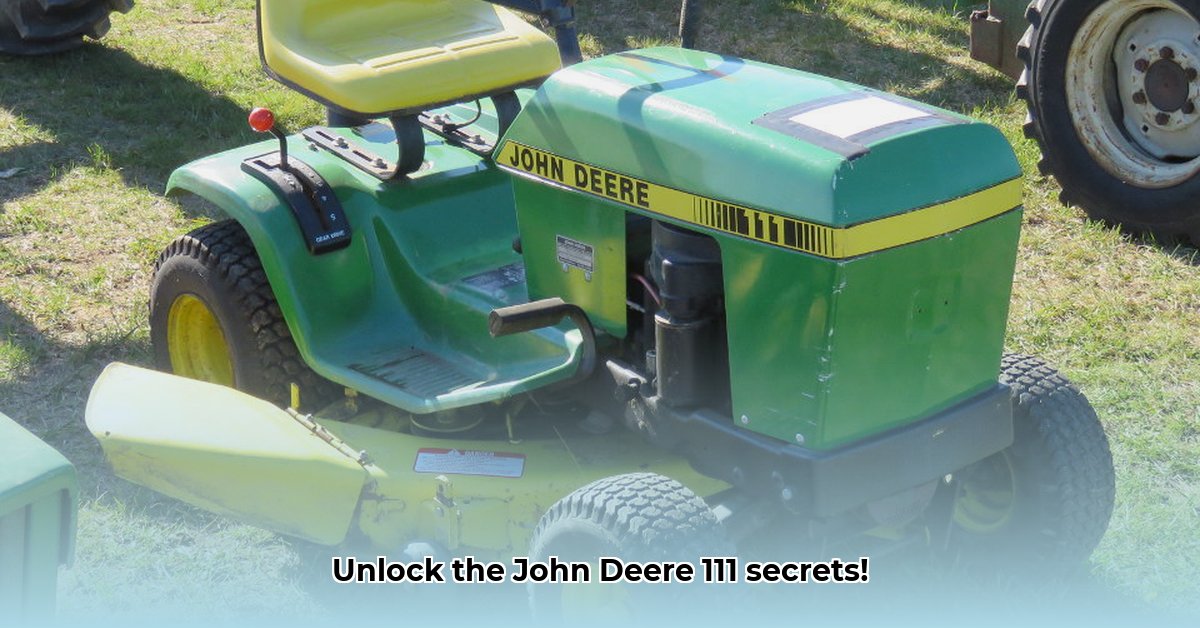
The John Deere 111 lawn tractor, a stalwart of the late 1970s and early 1980s, embodies classic American engineering. This guide delves into the heart of this workhorse, providing a comprehensive overview for owners, collectors, and enthusiasts alike. Whether you're tackling a restoration project or simply aiming to keep your 111 running smoothly, this guide offers invaluable insights and practical advice. For additional accessories, check out John Deere parts.
Under the Hood: Unveiling the 111's Powerplant
This iconic tractor boasts a powerful 11-horsepower, 399cc Briggs & Stratton single-cylinder engine (often model number 252707, though variations exist). This robust engine, capable of tackling everything from mowing to snow blowing, delivers reliable performance. Its straightforward design makes repairs manageable, although sourcing parts might require some dedicated searching. What's unique about this engine, compared to more modern models, is its direct connection to the operator; you truly feel the machine's power.
Behind the Wheel: A Manual Masterpiece
Forget power steering – the John Deere 111 offers a distinctly hands-on experience. Its manual steering provides direct feedback and a palpable connection to the machine. The five-speed manual transmission demands active gear selection, adding a layer of engagement absent in modern automatic models. While less convenient than its modern counterparts, this direct control makes operating the 111 a rewarding and unique experience. This tactile relationship with the machine is a hallmark of vintage equipment. Have you ever considered the benefits of direct feel over automated assistance?
Versatility and Attachments: Expanding Capabilities
The John Deere 111 typically came equipped with a 38-inch cutting deck, ideal for most lawns. But its versatility extends far beyond mowing. With the right attachments, this tractor can transform into a snow blower, grader, or a host of other yard workhorses. While finding these attachments might require some searching, their acquisition significantly expands the 111's utility and value. This adaptability speaks to the robust design and innovative spirit of its era. What other attachments have you discovered for your John Deere 111?
Maintenance and Restoration: Keeping the Legacy Alive
Maintaining a vintage machine like the John Deere 111 requires dedication. Regular checks of fluid levels, lubrication of moving parts, and engine cleaning are vital for longevity. Sourcing replacement parts might require perseverance, but online communities and specialty suppliers provide valuable resources. This dedication to maintenance not only preserves the machine but also sustains a legacy of quality craftsmanship. What are your most effective maintenance strategies for your John Deere 111?
A Comparative Overview: Weighing the Pros and Cons
The John Deere 111, like any machine, presents a balance of advantages and disadvantages.
| Feature | Pros | Cons |
|---|---|---|
| Engine | Powerful and reliable for its time; straightforward design facilitates repairs. | Can wear down over time; parts sourcing might be challenging. |
| Transmission | Sturdy and simple five-speed manual; easily repaired. | Requires manual shifting; less convenient than automatic transmissions. |
| Steering | Direct and engaging driving experience; precise control. | Lacks power steering; can be tiring on larger lawns. |
| Attachments | A good variety available; adaptable for various lawn and yard tasks. | Parts availability might be limited; requires dedicated research. |
Restoring Your John Deere 111: A Step-by-Step Guide
Restoring a John Deere 111 is a rewarding project, connecting you with history and mechanical ingenuity. However, it requires careful planning and execution.
Assessment: Begin with a thorough inspection, noting rust, damage, and missing parts. Photography is crucial for documentation and reassembly.
Parts Sourcing: Online marketplaces, vintage tractor suppliers, and salvage yards are valuable resources. Be prepared for a search that may require considerable time and effort.
Disassembly and Cleaning: Meticulous disassembly, with clear labeling of each component, is essential. Thorough cleaning, including rust removal, is also crucial for a successful restoration.
Engine Overhaul: This step often requires specialized knowledge. Consult manuals, online resources, or seek professional assistance. Safety precautions are paramount when working on engines.
Reassembly and Testing: Reassembly is the inverse of disassembly. Follow your labels and pictures carefully. Thorough testing upon completion is essential to ensure proper functionality.
The Rewards of Restoration: More Than Just a Machine
Restoring a John Deere 111 is more than just a mechanical project; it's a contribution to sustainability, preserving a valuable machine and reducing waste. It's a testament to your skills and a connection to a bygone era of craftsmanship. The cost may be significant, but the rewards extend beyond the monetary value. Have you ever considered adding a restored John Deere 111 to your collection, not for resale, but for the pride and satisfaction of the restoration itself?
Community and Collaboration: Sharing the Journey
Connecting with online communities dedicated to vintage John Deere tractors provides invaluable support and expertise. Engage in forums, share your experiences, learn from others, and contribute to a collective knowledge base. Collaboration enhances the entire restoration process, making what might seem impossible individually, achievable through shared experience and resources.